How to build a cold-email list of local businesses
By Doug Nielsen, Product Manager · Updated · first published
To build a cold-email list of local businesses, pick one niche in one area, pull every Google Maps listing ZIP by ZIP, add each business's email, then dedupe and verify before sending.
Pulling the listings and finding the emails is one job in Hubertino: its email extractor checks each business's own website. On Starter and Pro, Lead Enrichment adds an owner's name and title, where listed, for a personal first line.
Key takeaways
- A tight niche (“dentists in Chicago”) makes every line specific.
- A city-wide search caps out early: search each ZIP code instead.
- Segment before you write; verify before you send.
- Check local law: Germany requires prior consent for email ads.
On this page6
1. Pick a niche you can say something true about
The niche sets which data matters: phone and reviews for service businesses (roofers, plumbers, movers), foot traffic for retail, reputation for lawyers and dentists.
2. Pull the complete list, ZIP by ZIP
Hubertino's location picker turns a city into one search per ZIP code.
- places before one Google Maps search stops
- 100–120
- dentists in Chicago, by our rough estimate
- ~3,400
Tip
Dedupe on place ID
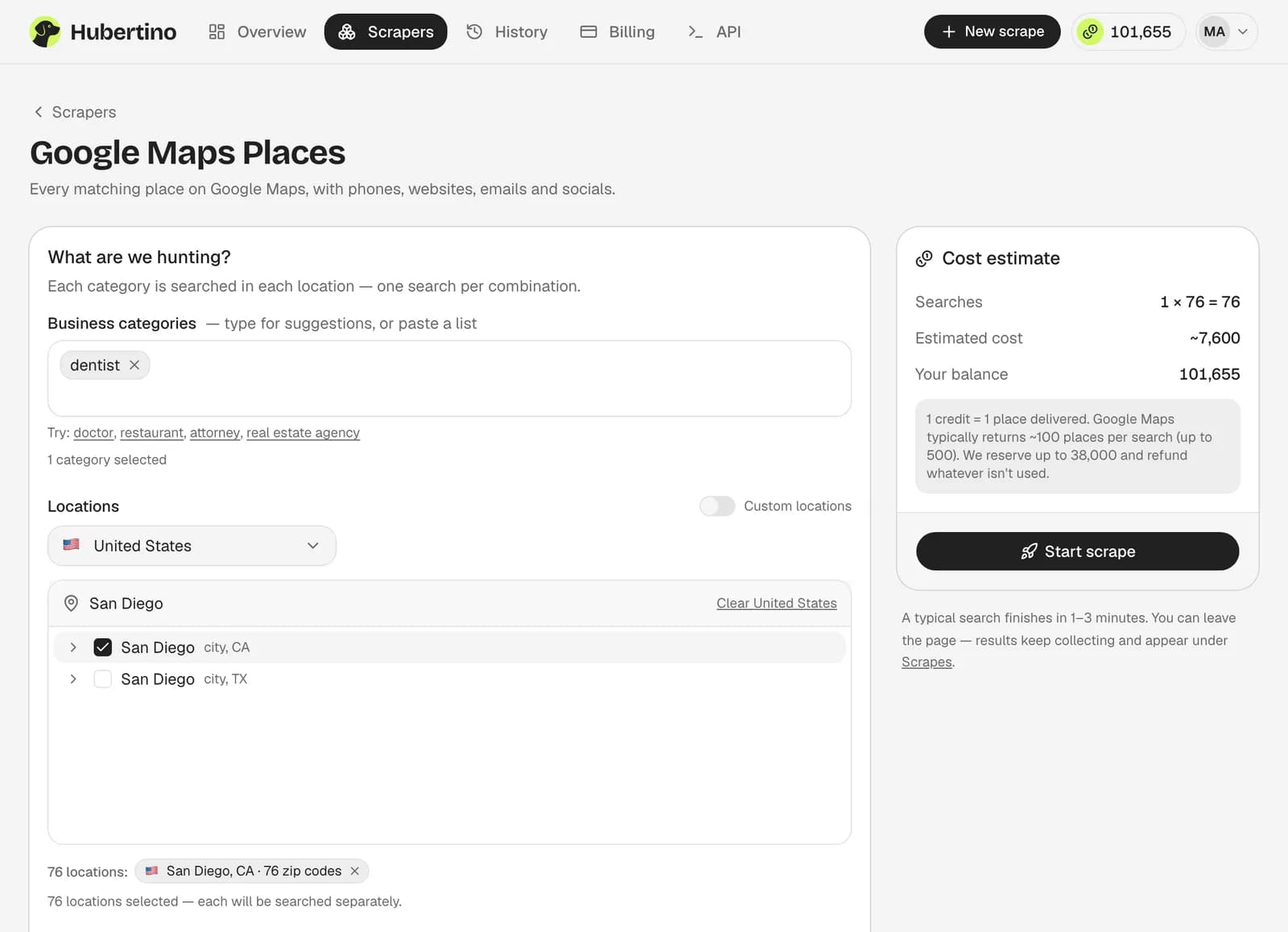
Get the whole list in one job
- 100 free credits
- No card required
3. Enrich and segment
Each row has phone, website, rating, reviews and, where found, email and socials.
- Low-rated businesses get a different pitch from 4.8-star ones
- No website: a phone/SMS segment, not an email one
4. Clean, verify, send
Dedupe by domain and phone
Branches share contacts: one thread per company.Verify emails before sending
Use your sender's check (Instantly, Smartlead) or follow how to verify and clean a scraped email list.Personalize from the data you already have
Rating, review count, neighborhood and category are merge fields: “Noticed you're at 4.2 with 80 reviews on Maps.”Stay lawful
Identify yourself, make opting out one reply, and follow your market's rules (CAN-SPAM, PECR, GDPR legitimate interest); in Germany, § 7 UWG requires prior consent for email ads. Our legal guide covers each market.
Common questions
How big should a local list be?
What does a list like this cost?
Written by
Doug Nielsen, Product Manager
Doug works on Hubertino; the guides on this site are published under his name. Last updated .