How to find business phone numbers for cold calling
By Doug Nielsen, Product Manager · Updated · first published
To build a cold-calling list, scrape a category across an area on Google Maps: 93% of the 70,643 listings we sampled show a phone number, while an email turns up for only 63% of the 65,024 businesses we checked.
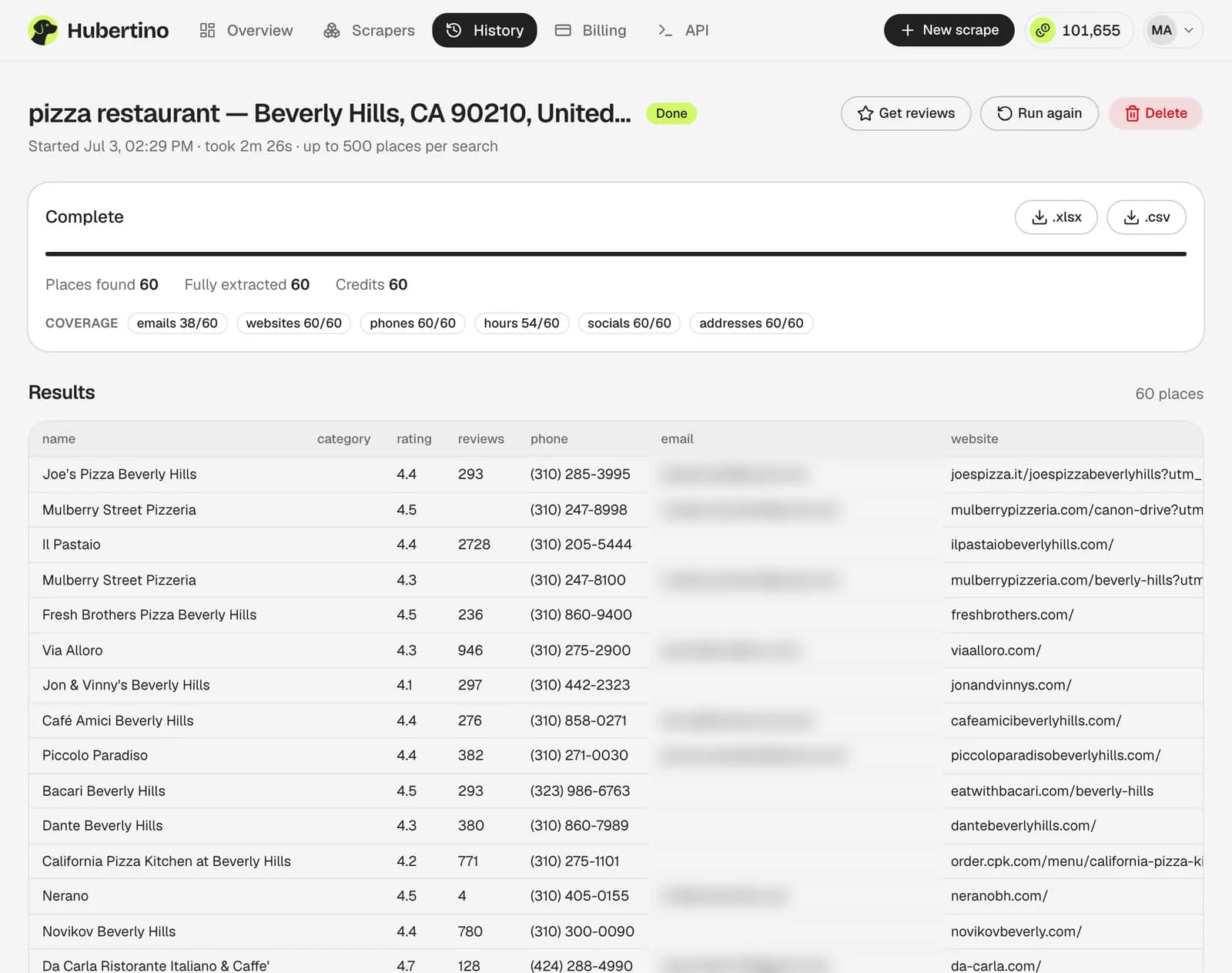
Our Google Maps data extractor puts working hours and review count beside each number, so you can time calls and size firms.
Key takeaways
- Call one ZIP code at a time, with the listing's details on the sheet.
- Time calls by the hours column.
- Check each market's B2B calling rules before dialing.
On this page5
Where the numbers come from
Straight off the listing: the number the business publishes, which rings the place, not a switchboard or a data broker's guess.
- Open the XLSX, or import a CSV with the phone column set to Text; otherwise Excel strips the leading “+”. See the CSV-versus-XLSX guide.
- A number shared across rows is usually one owner with several listings: one call, not four.
Building a call list worth working
Sort by geography, not alphabetically
Work one ZIP code at a time: you sound local, can name the neighborhood, and won't cross the metro if a call becomes a visit.Bring the listing context onto the call sheet
Rating, reviews, website and hours are in the export. “I saw you're at 4.7 with 200 reviews but no site linked” gets a conversation; “Is the owner available?” gets a hang-up.Use the hours column to time the call
Not a restaurant at 7pm, a dentist at 9am or a roofer in a storm week.Log outcomes against the place ID
Keep it in your CRM so next quarter's re-scrape merges instead of duplicating.
Get the whole list in one job
- 100 free credits
- No card required
Do-not-call rules for B2B calls
Most markets treat business-to-business calls differently from consumer calls, but not identically. Check the rules for the market you're calling before you dial, and honor a “don't call again” the first time you hear it. This isn't legal advice.
- US: do-not-call rules, with a business-to-business carve-out.
- UK: the CTPS register for corporate subscribers.
- EU: several countries have their own registers.
Common questions
Are cell phone numbers included?
Can I get a decision-maker's name?
Written by
Doug Nielsen, Product Manager
Doug works on Hubertino; the guides on this site are published under his name. Last updated .