Restaurant lead generation for hospitality suppliers
By Doug Nielsen, Product Manager · Updated · first published
Suppliers of food, equipment, POS, linen or staffing should scrape restaurants by cuisine and neighborhood, re-scrape often because the market churns, and call between services. Restaurants switch suppliers more readily than almost any buyer: margins are thin and they know it.
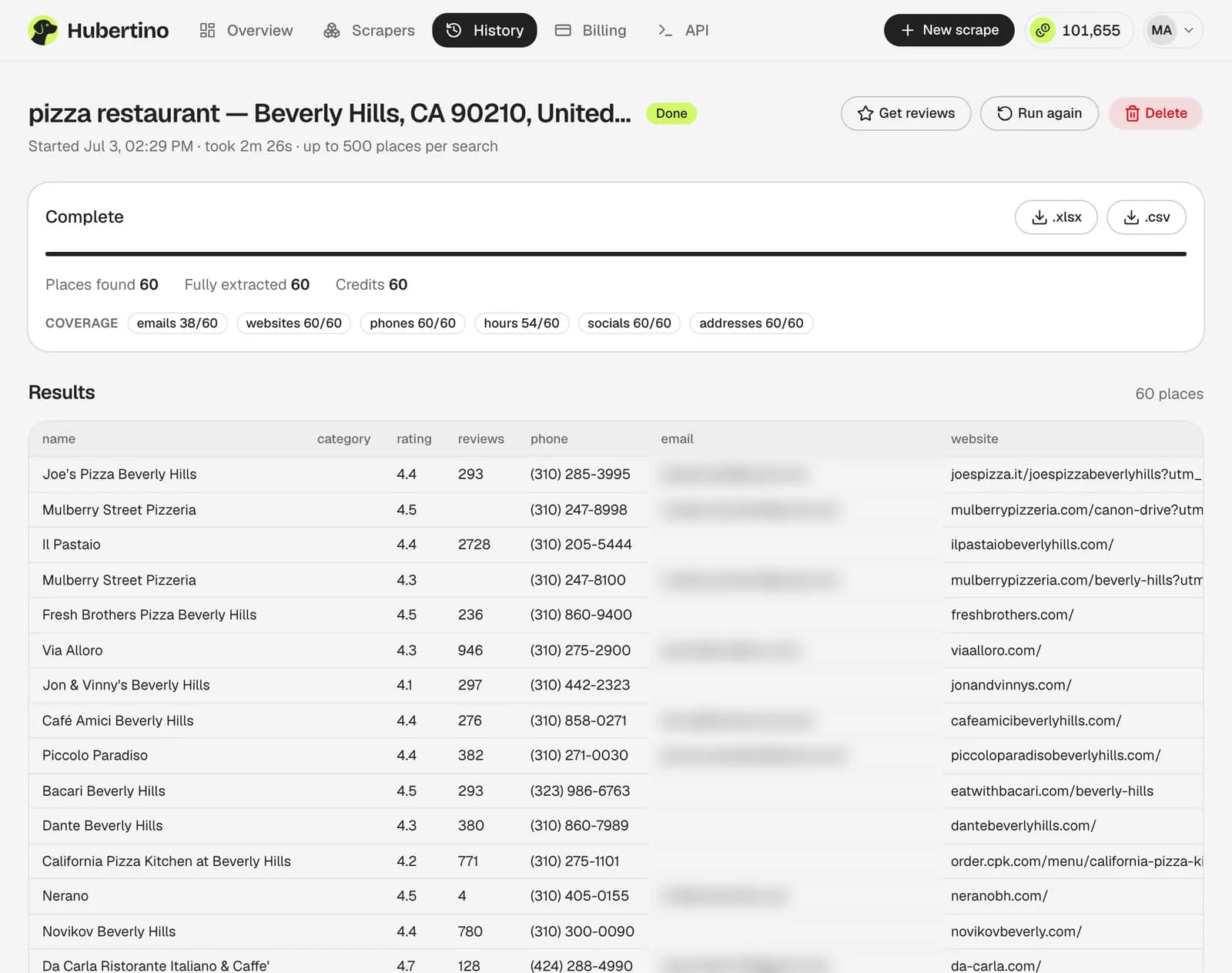
Restaurants open and close fast, so re-pull often: a finished job in our Google Maps scraper reruns with one Run again click. Taking orders through a delivery app or bookings through a platform page? Our website check flags those listings, a ready pitch.
Key takeaways
- The list rots within months; new owners put every supplier contract back in play.
- Cuisine is the product filter: a flour supplier wants bakeries and pizzerias, not sushi bars.
- Walking in works unusually well.
- Lead with a per-unit price comparison, not a company introduction.
On this page6
Assume your list is decaying while you use it
Restaurants open, close, rebrand and change hands constantly. A January list is wrong by summer: closed venues, new names at old addresses, new owners with no loyalty to the previous supplier. Re-scrape at least quarterly and diff on place ID, since new and vanished listings are both leads; the guide on refreshing stale lists covers how.
Segment by what a kitchen actually needs
Filter by cuisine
Maps categorizes by cuisine (pizza, sushi, barbecue, Indian, café, bakery): hospitality's most useful, most underused filter.Separate independents from groups
Shared domains and phone numbers reveal groups. A three-site independent group is often ideal: big enough to matter, small enough that the owner decides. National chains buy through procurement.Add the adjacent categories
Hotels, caterers, pubs, bars, cafés, food trucks, care homes and school canteens buy much the same, and “restaurant” won't find them.Drop venues in trouble
A rating under 3.5 with recent one-star reviews about service and hygiene is a risk if you sell on credit.Watch business status
Drop closed listings, permanent or temporary, on every refresh; shuttered venues waste a rep's day.
Build your restaurant list
- 100 free credits
- No card required
When to make contact
Never call during service. Many venues close Mondays, so check opening hours before an early-week call. Ask for the owner or head chef at an independent, the operations manager at a group, and name a specific product and why it's cheaper or better.
- between the lunch rush and evening prep in most kitchens
- 2–4pm
- for venues that trade hardest on weekends
- Mon–Tue
Tip
Walk in
What actually persuades a restaurant
Food cost percentage, labor cost and time, not brand or features, so open with a per-unit price comparison.
Note
One failed Friday delivery
Common questions
How often should I re-scrape a restaurant territory?
Do restaurants publish usable email addresses?
Can I find newly opened venues specifically?
Written by
Doug Nielsen, Product Manager
Doug works on Hubertino; the guides on this site are published under his name. Last updated .